
Open almost any popular English course and you'll hear the same rule: "Think in English. Never translate." It sounds disciplined. But if you're a beginner or intermediate learner whose first language is Bengali, Hindi, Urdu, Arabic, Chinese, Japanese or Korean, forcing English-only too early usually makes you slower, not faster.
The smarter path is translation-first learning: meet a new word in your own language first, understand it instantly, then move it into English through context and practice. Here's why it works — and how to avoid the one trap that gives translation a bad name.
Why your native language is an advantage, not a crutch
You already spent years building a rich web of concepts in your mother tongue. When you learn that "diligent" means "মেহনতী / मेहनती / مجتهد", you don't have to build the concept from scratch — it already exists. You're just attaching a new English label to an idea your brain fully understands. That single step removes most of the friction beginners feel.
Psychologists call this dual coding: information stored through two routes — your native meaning and the new English form — is recalled far more reliably than a definition memorized in a language you barely know. Looking up an English word and getting an English-only definition often just trades one unknown for several more.
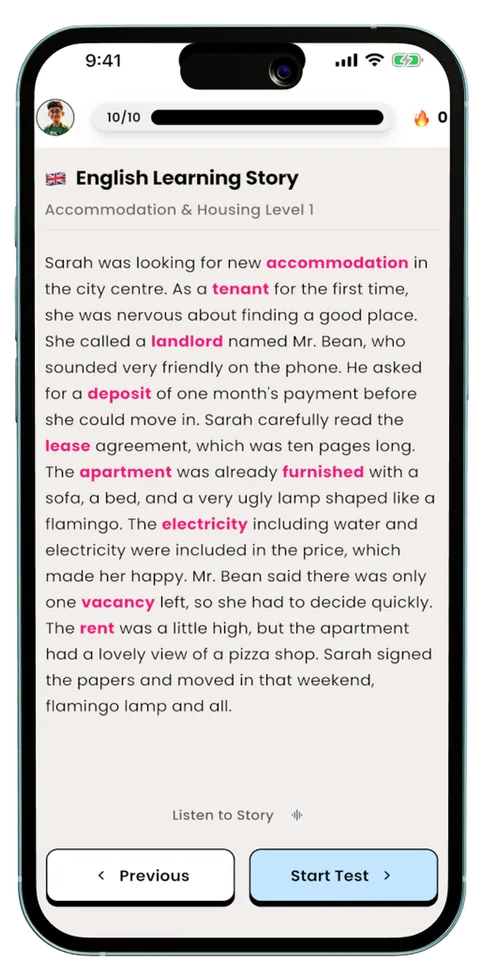
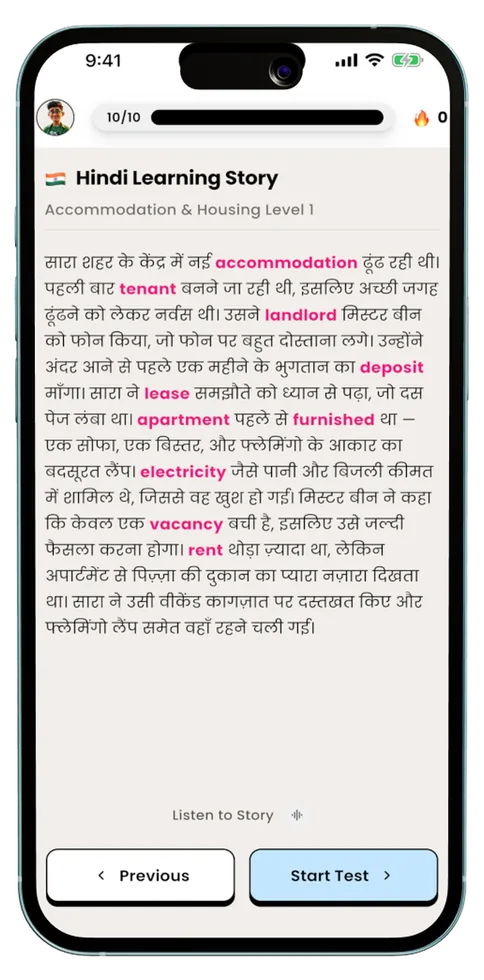
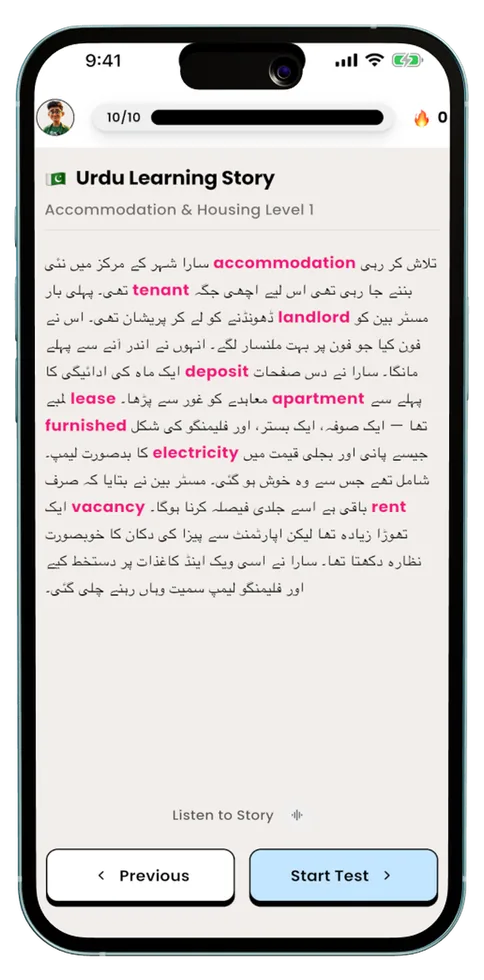
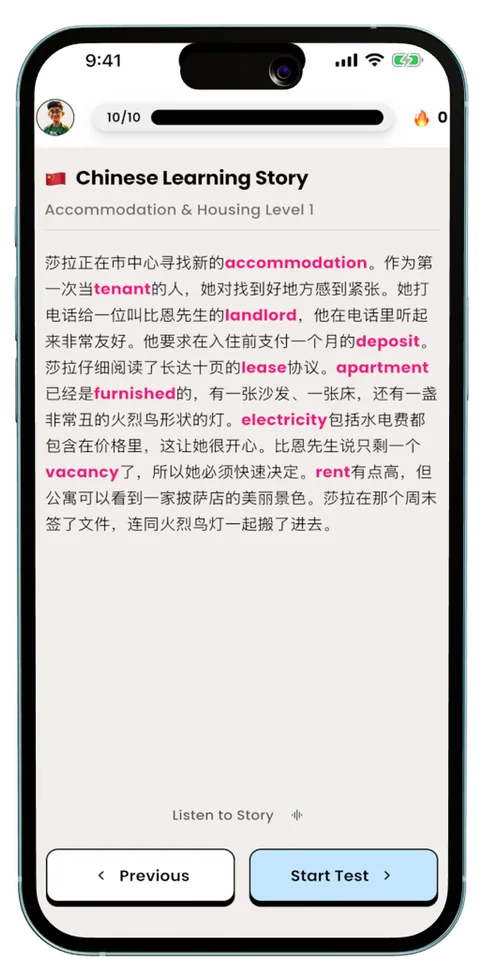
The trap: getting stuck in word-for-word translation
Translation gets a bad reputation for a real reason: if you onlyever translate, you build a slow mental habit of converting every English sentence back to your language before you understand it. That's what blocks fluency.
The fix isn't to ban translation — it's to use it as a bridge you cross and then leave behind. Native meaning gets you onto the word quickly; context and recall move you to the other side, where you understand the word directly in English.
The 3-step bridge from native language to English
Here's the sequence that keeps the speed of translation without the fluency tax:
- Step 1 — Anchor. See the new word with its meaning in your native language. One quick, clear hit of understanding.
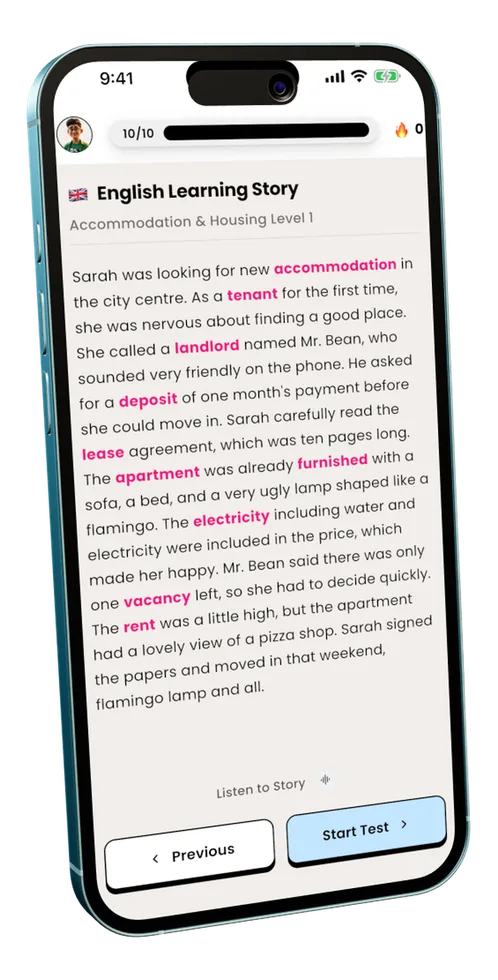
- Step 2 — Contextualize. Read the word inside an English sentence or short story, so you feel how it actually behaves — its grammar, tone and typical partners.
- Step 3 — Recall in English. Test yourself in English only: choose the meaning, fill the blank, spell it. This is where the word detaches from translation and becomes yours.
Use your native language to understand the word — then use English to own it.
Who benefits most
Translation-first learning helps almost everyone below advanced level, but it's especially powerful if you're studying English while living in a non-English-speaking country, preparing for IELTS or TOEFL from a regional language background, or returning to English after years away. Advanced learners can lean more on English-only — but even they benefit from a fast native-language check on rare or abstract words.
How to practice it every day
Keep it simple. Learn a small set of words with native-language meanings, read them inside a short English story, then close the translation and test yourself in English. Ten minutes a day of this loop — anchor, contextualize, recall — will outpace hours of English-only cramming for most learners.
Your native language isn't the enemy of English fluency. Used as a bridge, it's the fastest on-ramp you have.
Put these ideas into practice
VocabMate Pro is built around exactly these principles — native-language meanings in 7 languages, story-based learning, a 3-phase recall test, a 150K-word offline dictionary and daily streaks.